当我们聚集时:支持每周圣餐的圣经、历史与信条论证(第一部分)
When We Gather: A Biblical, Historical, and Confessional Case for Weekly Communion (Part 1)
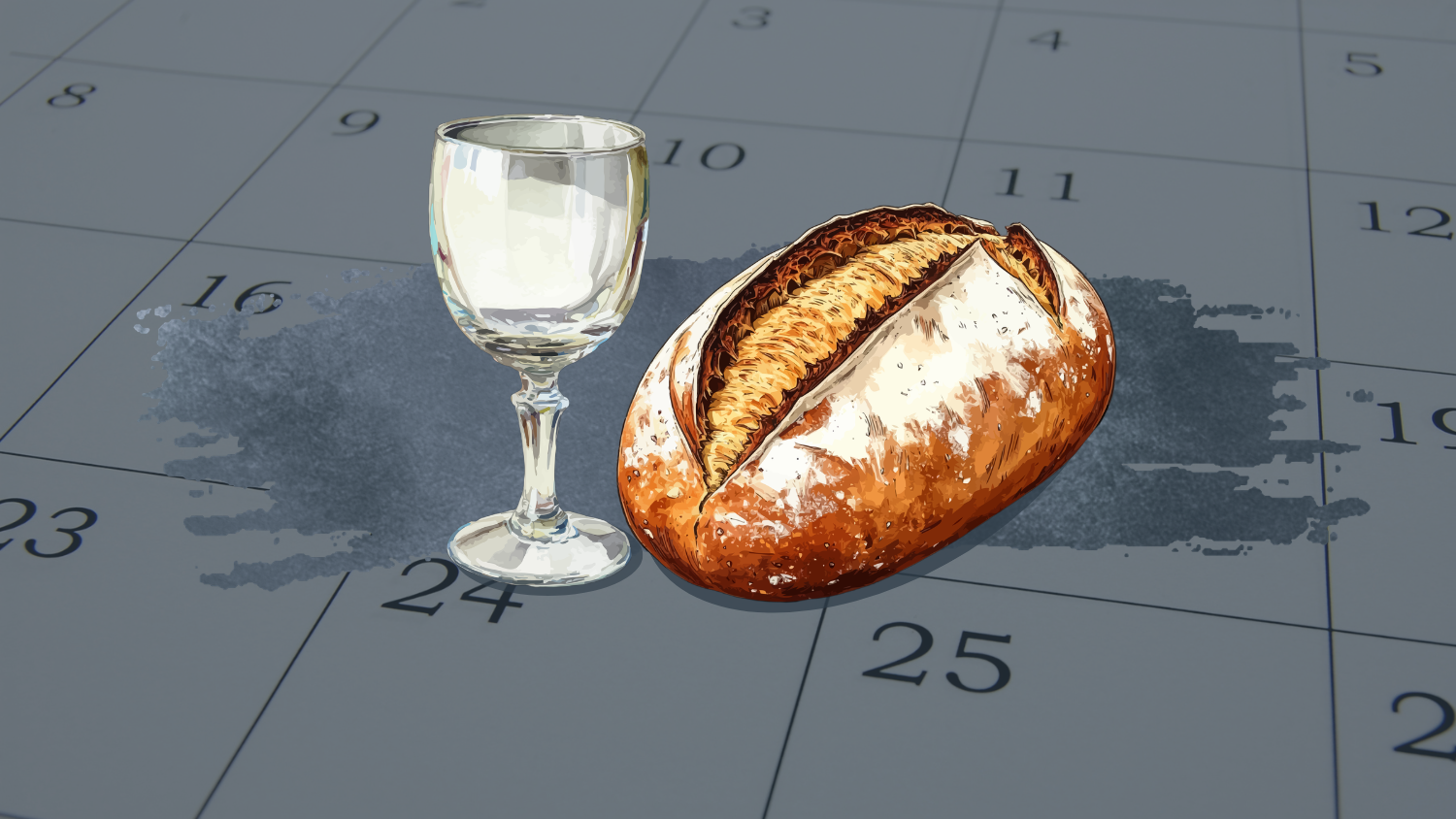
This is the first installment in a three-part series on the frequency of the Lord’s Supper.
这是关于圣餐频率的三部分系列文章的第一篇。
Preface—Why This Series?
前言——为何写这个系列?
This series began not with a proposal to change church practice, but with a question that emerged from conversation. In separate discussions with my own pastor and with my father-in-law, a retired minister, both appealed thoughtfully to church history and the Reformed confessions in support of a monthly observance of the Lord’s Supper. In both cases, the reasoning was careful and reverent. The Supper was treated not as incidental, but as something weighty enough to warrant restraint.
这个系列的开始并非源于一个改变教会惯例的提议,而是源于对话中产生的一个疑问。在分别与我的牧师以及我的岳父(一位退休牧师)讨论时,他们都审慎地诉诸于教会历史和改革宗信条,以支持每月一次的圣餐礼。在这两种情况下,其推论都十分谨慎且虔敬。圣餐被视为并非次要之事,而是足够庄重,以至于需要节制地施行。
What struck me was not disagreement about the importance of the Supper, but the confidence with which its frequency was assumed rather than examined. The appeal to history and confession was sincere—but it raised a further question: do those sources, read carefully and in context, point in the direction we often think they do?
令我触动的是,我们之间并非在圣餐的重要性上存在分歧,而是在于对其频率的认定如此理所当然,以至于无需审视。诉诸历史和信条的态度是真诚的——但这引发了进一步的疑问:如果仔细地并在语境中阅读这些资料,它们所指向的方向是否真的如我们通常认为的那样?
That question sent me back first and foremost to Scripture. What I found was not an explicit command for weekly communion, but something more formative: a consistent pattern. The New Testament presents the Lord’s Supper as a regular and assumed feature of the church’s gathering. The case for its frequency arises not from a single verse, but by what the Reformed tradition has long described as good and necessary consequence—conclusions that flow naturally from the whole counsel of God.
这个问题促使我首先回到圣经。我发现的并非一个关于每周圣餐的明确命令,而是一些更具塑造意义的东西:一个一贯的模式。新约将圣餐呈现为教会聚集时的一种常态且理所当然的特征。关于其频率的论据并非源于单一的经文,而是源于改革宗传统长期以来所描述的“良好且必要的结论”——即那些从神的全备旨意中自然得出的结论。
This essay forms the first part of a three-part series, making the biblical, historical, and confessional case for weekly communion—not as a liturgical innovation, but as the ordinary pattern of the church when it gathers. Framed this way, the question of frequency is not primarily about preference or novelty, but about what the New Testament itself appears to assume as normal Christian worship—and how those assumptions were received and carried forward by the church.
本文是一个三部分系列文章的第一篇,旨在从圣经、历史和信条的角度论证每周圣餐的合理性——将其视为教会聚集时的常态模式,而非一种礼仪创新。如此界定,频率问题的主要不在于偏好或新奇,而在于新约本身将什么样的基督徒崇拜视为常态,以及这些假设是如何被教会接纳并传承下来的。
Any serious engagement with the church’s history must eventually reckon not only with continuity, but with divergence—especially where later practice reflects instincts formed under specific pastoral or polemical pressures. That reckoning lies beyond the scope of this essay and will be addressed more directly in a larger work. Here, my purpose is deliberately constructive rather than corrective: to present the strongest positive case for weekly communion possible, while honoring the good intentions and pastoral concerns that have shaped differing practices within the Reformed tradition.
任何对教会历史的严肃探讨,最终必须不仅正视其延续性,还要正视其分歧——尤其是后期的实践反映了在特定的牧养或论战压力下形成的直觉。这种正视超出了本文的范围,将在更大规模的作品中更直接地讨论。在这里,我的目的刻意地倾向于建设性而非纠正性:即在尊重塑造了改革宗传统内不同实践的良苦用心和牧养考量之同时,尽可能地为每周圣餐提供最强有力的正面论证。
For many churches, monthly observance has come to feel like a careful middle ground. Weekly communion can sound excessive, while quarterly observance feels insufficient. Monthly rhythms promise reverence without routine, meaning without monotony. The concern is not usually theological neglect, but pastoral caution—the fear that repetition will dull significance rather than deepen it. That instinct deserves to be taken seriously, even as it is examined in light of Scripture.
对于许多教会而言,每月一次的圣餐礼已然成为一种谨慎的中庸之选。每周一次似乎过于频繁,而每季度一次又显得不足。每月的节奏承诺了在不陷入常规之中的敬虔,在不陷入单调之中的意义。这种顾虑通常并非出于神学上的忽视,而是出于牧养上的谨慎——担心重复会削弱而非深化圣餐的意义。这种直觉值得被认真对待,即便它需要根据圣经来重新审视。
Behind that concern often lies a particular view of how meaning is preserved in Christian practice. We tend to assume that rarity safeguards value, while regularity risks familiarity. Yet Scripture frequently teaches the opposite. God forms his people not primarily through infrequent intensifications, but through steady provision. The question, then, is not whether weekly communion feels unfamiliar to modern congregations, but whether the New Testament treats the Supper as a special interruption or as part of the church’s ongoing life with God.
在这种顾虑背后,往往隐藏着一种关于基督徒实践如何保持意义的特定观点。我们倾向于认为,稀少能保障价值,而规律则有陷入习以为常的风险。然而,圣经经常教导相反的道理。上帝塑造祂的子民,主要不是通过偶尔的强化,而是通过持续的供应。因此,问题不在于每周圣餐是否让现代会众感到陌生,而在于新约是将圣餐视为一种特殊的中断,还是将其视为教会与上帝共同生活的常态。
Framing the issue this way clarifies what is at stake. The question is not whether churches that observe the Supper monthly are irreverent or careless. It is whether the rhythms we have inherited reflect the assumptions of the New Testament itself—or whether those assumptions have gradually shifted under the pressure of pastoral caution, historical circumstance, or habit.
这样界定问题便能阐明其核心所在。问题不在于每月举行圣餐礼的教会是否不敬虔或不谨慎,而在于我们继承的这种节奏是否反映了新约本身的假设——或者这些假设是否在牧养谨慎、历史环境或习惯的压力下逐渐发生了偏移。
Reading Scripture for Pattern, Not Prescription
从模式而非指令来阅读圣经
Any discussion of the frequency of the Lord’s Supper must begin with a clarification about how Scripture is being read. The New Testament does not provide a detailed liturgical manual, nor does it address every question of church practice by explicit command. Instead, it often teaches by pattern, assumption, and example. For this reason, the Reformed tradition has long held that the church is guided not only by what Scripture states directly, but also by what may be drawn from it by good and necessary consequence (WCF 1.6).
任何关于圣餐频率的讨论,都必须首先澄清阅读圣经的方式。新约并没有提供一份详尽的礼仪手册,也没有通过明确的指令来解决教会实践的每一个问题。相反,它经常通过模式、假设和榜样来教导。因此,改革宗传统长期以来一直认为,引导教会的不仅是圣经直接陈述的内容,还包括那些可以通过良好且必要的推论(WCF 1.6)从中得出的结论。
This principle applies whenever Scripture is read, but it becomes especially important when the church seeks to establish normative practices of worship in the absence of explicit commands. In such cases, Scripture forms the church not by filling in every detail, but by shaping patterns that must be received and ordered faithfully.
这一原则适用于任何圣经阅读,但当教会在缺乏明确指令的情况下寻求建立规范的崇拜实践时,它变得尤为重要。在这种情况下,圣经塑造教会的方式并非填补每一个细节,而是塑造出必须被忠实地接收并排序的模式。
With respect to the Lord’s Supper, the New Testament nowhere issues a command that reads, “You shall observe the Supper weekly,” or specifies any other interval by name. The question before us, therefore, is not whether Scripture supplies a numerical directive, but whether its witness, taken as a whole, assumes a regular pattern of communion as part of the church’s ordinary gathering. If it does, then the absence of an explicit command does not weaken the case; it clarifies the kind of case Scripture itself invites us to make.
关于圣餐,新约没有任何一处指令写道:“你们应当每周举行圣餐礼”,也没有明确规定任何其他的时间间隔。因此,我们面临的问题不是圣经是否提供了一个数字指令,而是其整体见证是否将规律的圣餐模式视为教会常规聚集的一部分。如果确实如此,那么缺乏明确指令并不会削弱这一论点;反而阐明了圣经本身邀请我们构建什么样的论据。
Devoted to the Ordinary: Acts 2:42
委身于常态:使徒行传 2:42
The clearest early picture of the church’s life together comes not in a prescriptive command, but in a description. Luke tells us that the first Christians “devoted themselves to the apostles’ teaching and the fellowship, to the breaking of bread and the prayers” (Acts 2:42). The verse is familiar, but its force is often understated. It presents the ordinary shape of the church’s shared life.
关于教会共同生活的最清晰的早期图景,并非来自一项规范性的命令,而是一段描述。路加告诉我们,第一批基督徒“都恒心遵守使徒的教训,彼此交接,擘饼,祈祷”(使徒行传 2:42)。这节经文人们很熟悉,但其力度往往被低估了。它呈现了教会共同生活的常态。
Several features of the passage deserve attention. Luke speaks of devotion—a settled, ongoing commitment rather than sporadic participation. Moreover, the four elements he names form a coherent whole. Apostolic teaching, fellowship, the breaking of bread, and the prayers are not isolated practices but together constitute the recognizable shape of the church’s gathering. Luke does not suggest that some of these belonged to the church’s regular rhythm while others were reserved for infrequent observance.
这段经文的几个特点值得关注。路加谈到了“恒心”——这是一种稳定的、持续的委身,而非零星的参与。此外,他提到的四个要素构成了一个有机整体。使徒的教训、彼此交接、擘饼和祈祷并非孤立的实践,而是共同构成了教会聚集时可辨识的形态。路加并没有暗示其中某些活动属于教会的常规节奏,而另一些则被保留为不频繁的 observance。
The phrase “the breaking of bread” has sometimes been reduced to a reference to ordinary, nonsacramental meals. Yet the context points in a more specific direction. The expression appears alongside practices that are unmistakably corporate and worship-oriented, and it is marked by the definite article: the breaking of bread. Whatever place shared meals held in early Christian life, Luke presents this act as a distinct and repeatable feature of the church’s common worship.
“擘饼”这个短语有时被简化为对普通非圣餐餐食的指代。然而,上下文指向了一个更具体的方向。这个表达与那些毫无疑问是集体性的、以崇拜为导向的实践并列出现,并且带有定冠词:the breaking of bread(那擘饼之举)。无论共同进餐在早期基督徒生活中占据什么位置,路加将这一行为呈现为教会共同崇拜中一个独特且可重复的特征。
Reformed commentators have often read Acts 2:42 in precisely this way. R. Kent Hughes, for example, argues that “the breaking of bread” refers to the regular observance of the Lord’s Supper, noting both its placement among explicitly worship-oriented practices and its deliberate distinction from common meals later in the chapter.1 [1. R. Kent Hughes, Acts: The Church Afire , Preaching the Word (Wheaton, IL: Crossway Books, 1996), 50.] On this reading, Luke presents a church continually devoted to word, prayer, and sacrament as part of its ordinary life together.
改革宗的注释家经常正是以这种方式解读使徒行传 2:42。例如,R. Kent Hughes 主张“擘饼”是指定期地遵守圣餐,他指出,这一行为既被置于明确以崇拜为导向的实践之中,又在随后的章节中与普通餐食被刻意区分开来。1 [1. R. Kent Hughes, Acts: The Church Afire , Preaching the Word (Wheaton, IL: Crossway Books, 1996), 50.] 根据这种解读,路加呈现了一个将道、祷告和圣餐作为其共同生活常态而持续委身的教会。
What is striking is not merely that the Supper appears here, but how it appears. Luke does not pause to justify it or regulate its frequency. He assumes it. The Supper is treated not as a heightened devotional moment, but as part of the church’s settled life together—received as naturally as the word is preached and prayers are offered.
令人惊叹的不仅是圣餐在这里出现,而且是它出现的方式。路加没有停下来为其辩护或规定其频率。他将其视为理所当然。圣餐被对待为教会稳定共同生活的一部分,而不是一个高度灵修的时刻——它被接纳得就像传道和祷告一样自然。
That assumption reflects a broader biblical pattern. Scripture consistently frames God’s provision for his people in terms of sustenance rather than intensification. When the Lord feeds Israel in the wilderness, he does not do so through rare abundance but through daily provision. Manna is given not as a feast for special occasions, but as nourishment for ordinary life, training the people in dependence rather than spectacle. Jesus echoes this logic when he teaches his disciples to pray for daily bread—not exceptional provision, but faithful supply.
这种假设反映了一个更广泛的圣经模式。圣经一致地将上帝对他子民的供应框架在“维持生命”而非“强化体验”的维度上。当主在旷野喂养以色列人时,他不是通过罕见的丰盛,而是通过每日的供应来实现。吗哪被赐下不是作为特殊场合的盛宴,而是作为日常生活的养分,训练子民依赖上帝,而非追求奇观。耶稣在教导门徒祈求日用饮食时也呼应了这一逻辑——不是祈求异常的供应,而是信实的供给。
Read in this light, the Lord’s Supper belongs to the same category of gift. It is not a reward for spiritual maturity or a capstone to worship, but nourishment given to a needy people. Like preaching and prayer, it is an ordinary means through which God strengthens faith over time. Repetition does not cheapen nourishment; it makes life possible.
从这个角度来看,圣餐属于同一类恩赐。它不是属灵成熟的奖赏,也不是崇拜的顶点,而是赐给匮乏之民的养分。与讲道和祷告一样,它是上帝随时间推移增强信心的常规手段。重复并不会降低养分的价值;相反,它使生命成为可能。
Moreover, Scripture also frames God’s relationship with his people through covenant meals that signify belonging and communion. From Israel’s sacrificial meals to Jesus’s table fellowship, eating together is never merely social. It is theological. Meals mark reconciliation, shared life, and covenant identity. To eat at the Lord’s table is to belong to the Lord’s people—called to gather as his covenant community on the Lord’s Day.
此外,圣经还通过象征归属与相通的圣约餐食,来构建上帝与他子民的关系。从以色列的祭祀餐食到耶稣的桌前团契,共同进餐绝不仅仅是社交行为。它是神学性的。餐食标志着和好、共同生活和圣约身份。在主的桌前进食,就是属于主的子民——被呼召在主日作为他的圣约群体聚集在一起。
The New Testament intensifies this logic rather than abandoning it. Jesus’s ministry culminates in a meal where bread and wine are given new covenant meaning. Each time the church eats and drinks, it remembers Christ’s death and anticipates the feast to come. The Marriage Supper of the Lamb (Rev.19:6–9) is not presented as a disconnected future spectacle, but as the fulfillment of a pattern already underway. The church’s present participation at the Table is a foretaste—not a replacement, but a pledge—of that final communion.
新约圣经不仅没有放弃这一逻辑,反而将其强化。耶稣的职事在一次晚餐中达到顶峰,在那里,饼和杯被赋予了新约的意义。教会每次吃喝,都是在纪念基督的死,并期待将来的筵席。羔羊的婚筵(启 19:6–9)并非被呈现为一个脱节的未来奇观,而是已经开始的某种模式的成就。教会现在参与圣餐,是对那最终团契的一次预尝——这不是替代,而是一种凭据。
Seen in this light, the Supper is not functionally set apart from the church’s ordinary rhythm, but an enacted promise woven into it. The church eats now because it will eat then. Regular participation does not diminish eschatological hope; it trains the church to live in expectation of it. In that context, a simple question emerges: if God has given the gifts of bread and wine with such clear analogies to regular nourishment, why should the sustenance of spiritual life be treated differently?
从这个角度看,圣餐在功能上并非与教会的常规节奏相分离,而是一个编织在其中的、被践行的应许。教会现在吃,是因为届时将要吃。经常参与圣餐并不会削弱末世的盼望,反而训练教会生活在对盼望的期待之中。在这种语境下,一个简单的问题随之而来:既然神赐下饼和杯,并赋予其如此清晰的日常滋养之类比,为何属灵生命的养分会被区别对待?
While Acts 2:42 does not tell us explicitly how often the Supper was celebrated, it does tell us where it belongs. It belongs within the ordinary gathering of the church, as a constitutive practice rather than a periodic—even if frequent—supplement. Practices to which a community is devoted shape its regular rhythm.
虽然使徒行传 2:42 没有明确告诉我们圣餐庆祝的频率,但它确实告诉了我们圣餐应当处于的位置。它属于教会的常规聚集,是一种构成性的实践,而非周期性的——即便频率很高——补充。一个群体所致力于的实践,塑造了其常规的节奏。
That logic becomes clearer when Acts is allowed to interpret Acts. If “the breaking of bread” referred merely to ordinary meals, Acts 20:7 would seem to imply that Christians ate only once a week—an implausible conclusion. As Keith Mathison observes, Luke’s language is therefore best understood as referring to the Lord’s Supper, observed on the first day of each week as part of the church’s regular gathering.1 [1. Keith A. Mathison, The Lord's Supper: Answers to Common Questions (Orlando, FL: Reformation Trust Publishing, 2019), Kindle edition.]
当允许使徒行传解释使徒行传时,这一逻辑变得更加清晰。如果“擘饼”仅仅是指普通的用餐,那么使徒行传 20:7 似乎暗示基督徒每周只吃一次饭——这是一个不可信的结论。正如基思·马蒂森(Keith Mathison)所观察到的,路加的语言因此最好被理解为是指主餐,即在每周的第一日作为教会常规聚集的一部分而守候.1 [1. Keith A. Mathison, The Lord's Supper: Answers to Common Questions (Orlando, FL: Reformation Trust Publishing, 2019), Kindle edition.]
Gathered to Break Bread: Acts 20:7
聚集擘饼:使徒行传 20:7
That pattern appears in more concrete form later in Acts. Luke records that “on the first day of the week, when we were gathered together to break bread, Paul talked with them” (Acts 20:7). Here the narrative moves from summary to situation. We are given a specific day, a specific purpose, and a recognizable shape to the gathering.
这种模式在使徒行传随后的记载中以更具体的形式出现。路加记录道:“七日的第一日,我们聚会擘饼的时候,保罗因为要次日起行,就与他们讲论”(徒 20:7)。在这里,叙事从概括转向了具体情境。我们得到了一个具体的日子,一个具体的目标,以及一个可辨识的聚集形式。
The church comes together on the first day of the week, and it does so to break bread. The Supper is not incidental to the meeting, but one of the reasons for it. Word and sacrament belong together in this assembly. Preaching and the Table are not competing emphases but coordinated acts. The Supper is not treated as a supplement to worship, but a defining element of the church’s Lord’s Day gathering.
教会于每周的第一日聚集,且聚集的目的就是为了擘饼。圣餐并非聚会的附带产物,而是聚会的原因之一。道与圣礼在这次聚集中是统一的。讲道与圣餐桌并非相互竞争的重点,而是协调一致的行为。圣餐不被视为崇拜的补充,而是教会主日聚集的一个定义性元素。
Read alongside Acts 2:42, the picture that emerges is consistent. The New Testament does not legislate frequency by command, but it presents a pattern in which the Lord’s Supper belongs to the church’s ordinary, weekly worship.
将此与使徒行传 2:42 结合阅读,呈现出的画面是一致的。新约圣经虽然没有通过命令来立法规定频率,但它呈现了一种模式,即主餐属于教会常规的每周崇拜。
Participation and Proclamation: 1 Corinthians 10–11
参与与宣告:哥林多前书 10–11 章
If Acts gives us the pattern of the church’s gathering, Paul’s first letter to the Corinthians helps us understand the theological logic of the Supper within that gathering. In 1 Corinthians 10, Paul frames the Supper in terms of participation: “The cup of blessing that we bless, is it not a participation in the blood of Christ?” (10:16). The Supper is not merely a reminder, but a corporate participation in Christ himself.
如果说使徒行传为我们提供了教会聚集的模式,那么保罗写给哥林多人的第一封信则帮助我们理解聚集之中圣餐的神学逻辑。在哥林多前书 10 章中,保罗从“参与”的角度来阐述圣餐:“我们所祝福的杯,岂不是同领基督的血吗?”(10:16)。圣餐不仅仅是一种提醒,更是集体性地参与基督本身。
That participation is inseparable from the church’s unity. “Because there is one bread, we who are many are one body, for we all partake of the one bread” (10:17). Here sacrament and ecclesiology converge. The Supper both expresses and reinforces the church’s shared life. A practice that both expresses and reinforces the church’s unity naturally assumes a prominent place in its gathered worship, a pattern Luke elsewhere describes as belonging to the church’s regular assembly.
这种参与与教会的合一密不可分。“我们虽多,仍是一个饼,一个身体,因为我们都是分受这一个饼”(10:17)。在此,圣礼与教会论交汇在一起。圣餐既表达又强化了教会共同的生活。一种既能表达又能强化教会合一的实践,自然会在其聚集敬拜中占据重要地位,而路加在其他地方描述的教会定期集会模式正是如此。
In 1 Corinthians 11, Paul turns from theological explanation to pastoral correction. The Supper in Corinth is being abused—marked by division and drunkenness. Yet Paul’s response is instructive. Again and again, he frames his instruction around what happens “when you come together.” He assumes a regular gathering in which the Supper is expected to take place.
在哥林多前书 11 章中,保罗从神学解释转向了牧养上的纠正。哥林多教会的圣餐被滥用了——其特点是分派与醉酒。然而,保罗的应对方式极具启发性。他一次又一次地将他的教导围绕在“当你们聚集”时发生的事情上。他预设了一个规律性的聚集,并且预期圣餐会在其中举行。
Crucially, Paul’s solution to abuse is not reduction. He does not suggest that the Supper should be practiced less often in order to preserve its meaning. Instead, he calls the church to discern the body and to receive the Supper rightly. The problem in Corinth is not how often the Supper occurs, but how it is being understood—or rather misunderstood. As the longstanding Latin maxim puts it, abusus non tollit usum—abuse does not negate proper use. Put another way, when error occurs, the church’s task is reform, not retreat. For those standing in the tradition of the Reformation, this should come naturally.
至关重要的是,保罗解决滥用问题的方案并非削减。他并没有建议为了维护圣餐的意义而减少其举行频率。相反,他呼吁教会要分辨身体,并正确地领受圣餐。哥林多教会的问题不在于圣餐举行的频率,而在于圣餐如何被理解——或者更确切地说,是被误解了。正如那句长久以来的拉丁格言所言:abusus non tollit usum——滥用并不取消正当的使用。换句话说,当错误发生时,教会的任务是改革而非退缩。对于站在宗教改革传统中的人们来说,这应该是自然而然的。
Each time the Supper is celebrated, Paul says the church “proclaims the Lord’s death until he comes” (11:26). The act itself is a proclamation—repeated, public, and eschatologically oriented. Correction presupposes regularity. Paul reforms the practice of the Supper; he does not retreat from it.
保罗说,每次庆祝圣餐时,教会就“表明主的死,直等到他来”(11:26)。这一行为本身就是一种宣告——它是重复的、公开的,且具有末世论导向的。纠正是以规律性为前提的。保罗改革了圣餐的实践,而非从中退缩。
Conclusion: When Scripture Assumes What It Does Not Command
结论:当圣经在未明令要求时将其视为前提
Taken together, Acts and 1 Corinthians establish a trajectory rather than a timetable. Scripture does not issue an explicit command for weekly observance of the Lord’s Supper, yet it consistently portrays a church devoted to the breaking of bread as part of its shared life—gathering on the Lord’s Day to do precisely that, and receiving the Supper as a practice central enough to warrant sustained theological instruction and pastoral correction.
综合来看,使徒行传和哥林多前书建立的是一种轨迹而非时间表。圣经虽然没有发出关于每周守圣餐的明确命令,但它始终将教会描绘成一个致力于“掰饼”作为共同生活一部分的群体——在主日聚集正是为了做这件事,并将圣餐视为一项足够核心的实践,以至于需要持续的神学教导和牧养纠正。
The biblical case for weekly communion, therefore, does not rest on a proof-text—no more than other central doctrines the church confesses, such as the Trinity. It arises by good and necessary consequence from the patterns Scripture presents and the assumptions it makes about the church’s worship when it gathers. If the Supper belongs to the church’s ordinary life, and if that life is ordered around the weekly Lord’s Day assembly, then regular—indeed weekly—communion follows naturally from the shape Scripture gives to the church’s worship.
因此,支持每周圣餐的圣经论据并非依赖于某段孤立的经文——正如教会所承认的其他核心教义(如三位一体)一样。它是从圣经所呈现的模式,以及圣经对教会聚集敬拜的假设中,通过合乎逻辑且必要的推论而得出的。如果圣餐属于教会的常规生活,而这种生活又是围绕着每周的主日聚集而展开的,那么定期的——事实上是每周一次的——圣餐,便自然地遵循了圣经为教会敬拜所设定的形式。
Even if the biblical logic points in this direction, some may hesitate at the conclusion. Surely the early church did not practice the Supper this way—or did it? That question leads naturally to the historical evidence. In Part II, we will examine how the church immediately following the apostles understood and ordered the Lord’s Supper, paying particular attention to whether weekly communion was regarded as exceptional or ordinary.
即使圣经的逻辑指向这个方向,有些人可能仍会对这一结论感到犹豫。早期教会肯定没有这样施行圣餐吧——还是说他们确实如此?这个问题自然地将我们引向历史证据。在第二部分中,我们将探讨使徒之后紧接的教会如何理解并安排圣餐,并特别关注每周圣餐是被视为例外还是常规。
This historical inquiry also helps address familiar Protestant concerns. Did the Reformers themselves practice weekly communion? If John Calvin supported frequent observance, why did many Reformed churches settle into quarterly patterns instead? Were those rhythms the product of theological conviction, pastoral compromise, or historical circumstance? By attending carefully to the early church, the Reformation period, and the realities that shaped post-Reformation practice, the historical case helps distinguish between what the church has sometimes done and what it has consistently understood the Supper to be. It is to that historical witness that we turn next.
这种历史探讨也有助于解决新教中常见的疑虑。宗教改革者本人是否施行每周圣餐?如果约翰·加尔文支持频繁地施行圣餐,为什么许多改革宗教会反而采用了每季度一次的模式?这些节奏是神学信念、牧养妥协还是历史环境的产物?通过仔细研究早期教会、宗教改革时期以及塑造后宗教改革实践的现实情况,历史论据有助于我们将“教会有时所做的”与“教会一贯地对圣餐的理解”区分开来。接下来,我们将转向这一历史见证。